%20Wien%20Museum.jpg)
Opening 1964
On 16 April 1964, Mayor Franz Jonas and Federal President Adolf Schärf opened the Danube Tower and the Danube Park. The 600,000 m² area extends in the 22nd district between Arbeiterstrandbadstraße, Donauturm and Hubertusdamm.
(c) Wien Museum
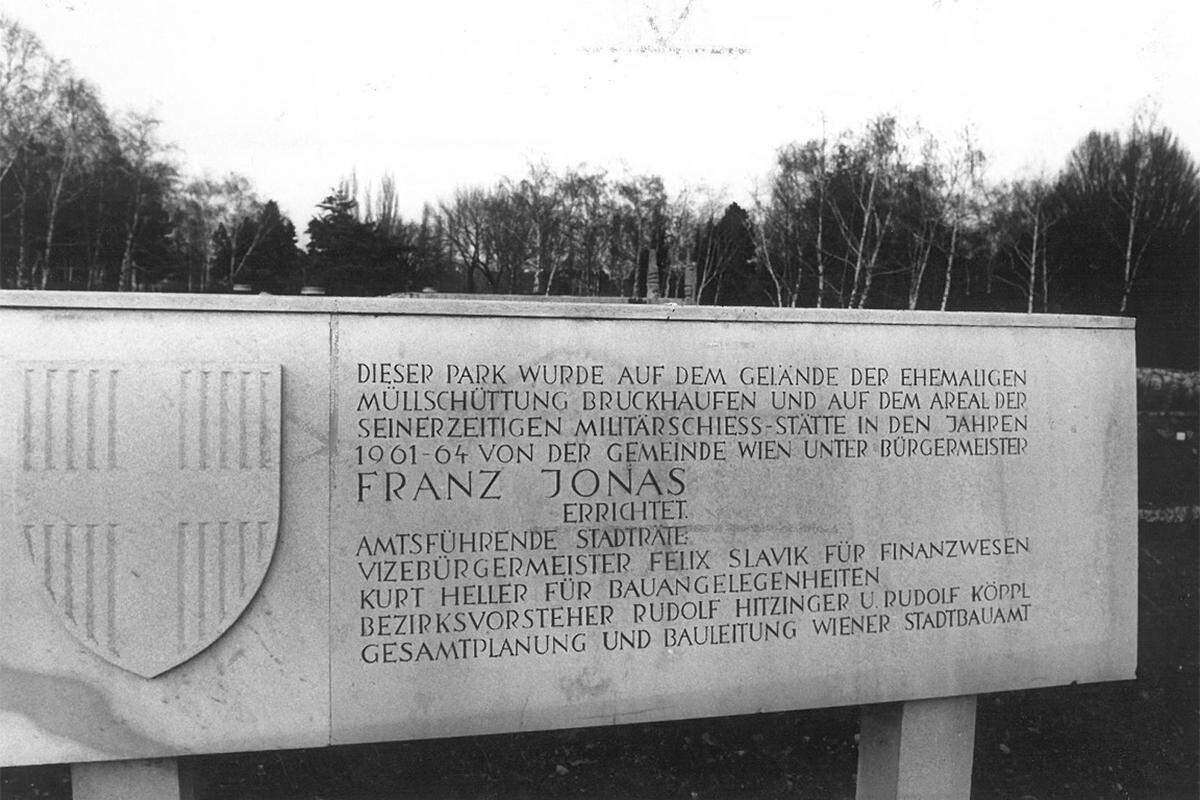
From rubbish dump to green oasis
The area was used as a landfill site until 1960. It was only for the Vienna International Garden Show (WIG64) that today's local recreation area was created - a real transformation!
WIG64 – Europe's largest garden show
Around 2.1 million visitors came to WIG64 in 1964. The follow-up exhibition WIG74 in Oberlaa even attracted 2.6 million visitors.
%20Br%C3%BCder%20Basch.jpg)
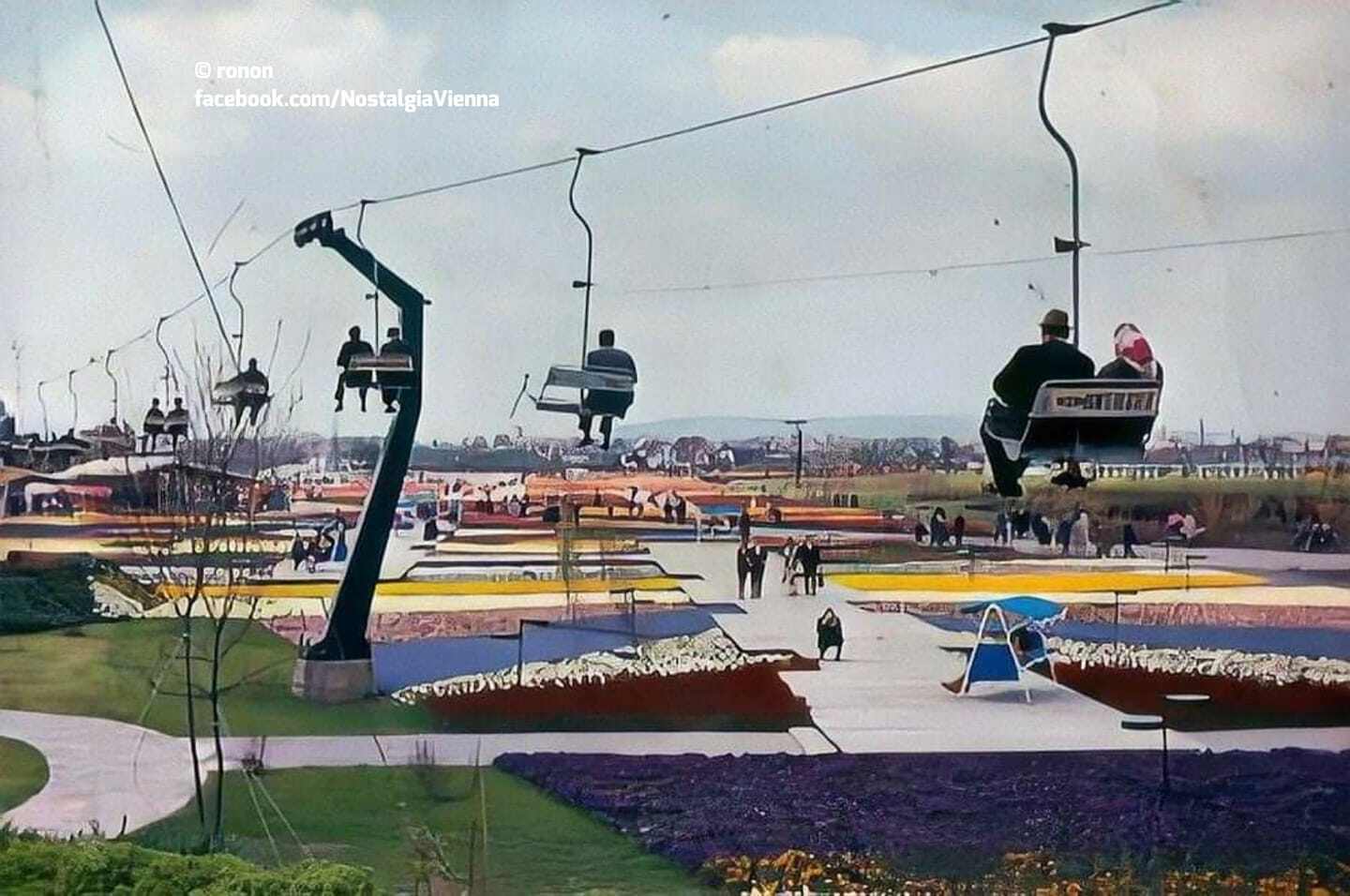
Chairlift with a view
A chairlift was built for the garden show and was in operation until 1983. More than 600,000 guests enjoyed the view of the Donau Park from the air.
(c) Brüder Basch
%20Basch%20%20Die%20Presse.jpg)
Balloon race for the ‘Golden Edelweiss’
On 17 May 1964, visitors to the garden show were treated to a spectacular sight: Several hot-air balloons took off from the WIG grounds for a race. The goal was the coveted ‘Golden Edelweiss’, a trophy for the winner.
This special race was one of the many highlights of WIG 64 and emphasised the festive atmosphere of the international garden show.
(c) Basch
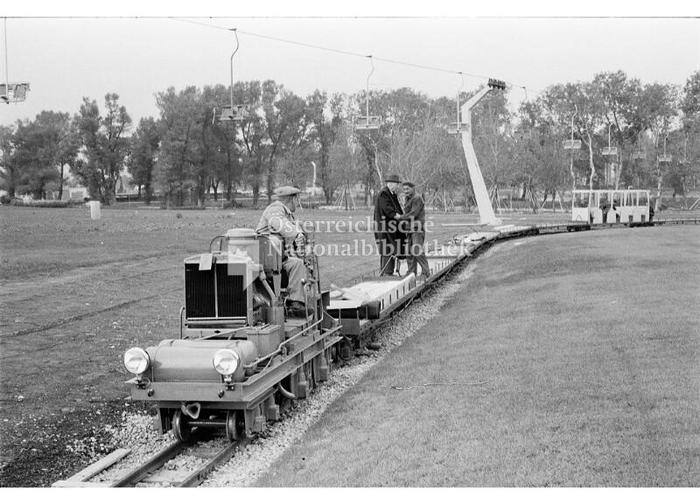
Donauparkbahn - nostalgia on rails
The Donauparkbahn has been doing its rounds since 1964. The 3.4 km long track leads through the most beautiful corners of the park.
%20Heinz%20Hosch%20%20Die%20Presse.jpg)
Motorised rickshaws - comfortable garden show tour
Those who didn't want to walk through the Donaupark could be driven in style in a motorised rickshaw - a popular means of transport during WIG64.
(c) Heinz Hosch
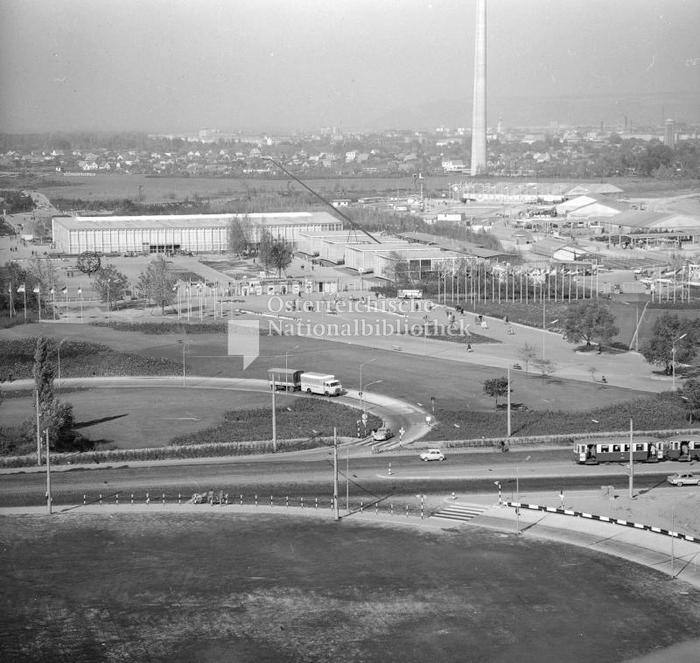
Donauparkhalle - From ice sports to a world exhibition?
In 1966, the Donauparkhalle built for the WIG64 was converted into an ice rink. It was the venue for the Ice Hockey World Championships in 1967 and 1987. In the early 1990s, the hall was demolished to make room for the planned - but never realised - World Exhibition.
%20Wien%20Museum.jpg)
The tower greenhouse - WIG 64 innovation
A particular highlight of the 1964 garden show was the tower greenhouse by Othmar Ruthner. The 41 metre high glass tower fascinated visitors with its innovative concept: thousands of plant pots rotated while they were automatically fertilised and watered.
The idea was quickly imitated - similar towers were already in place in Austria, Germany, Canada, Norway and Switzerland by 1965. A visionary example of modern agriculture and sustainable cultivation.
(c) Wien Museum
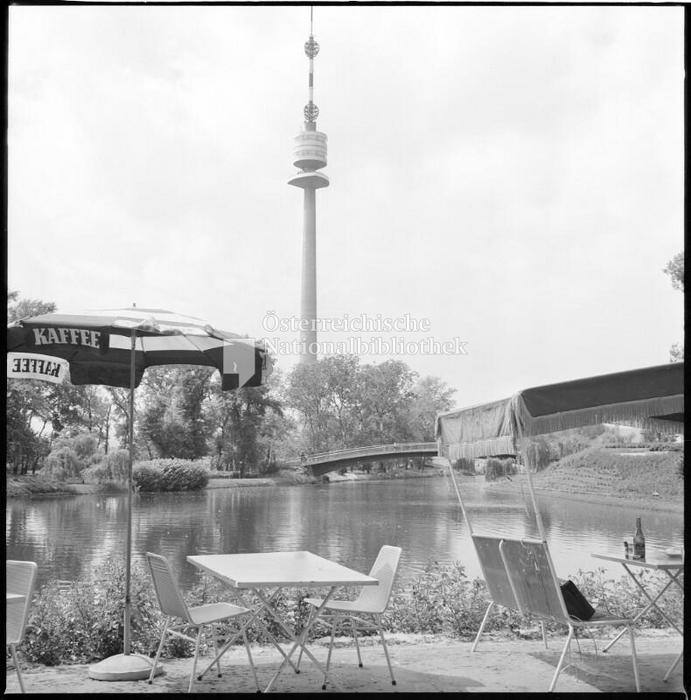
Lake Iris - a natural idyll in the Danube Park
The 30,000 m² Irissee was created for the 1964 garden show and has characterised the landscape of the Donaupark ever since. In the 1990s, the water threatened to seep underground, which is why the lake was renaturalised and a swamp zone was added. Today it is a valuable ecosystem and a popular place to relax.
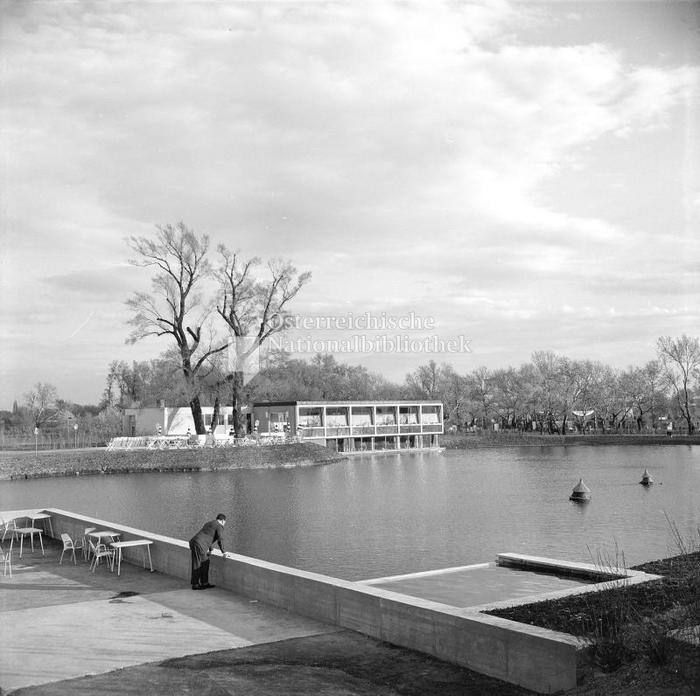
From lakeside restaurant to Korea Culture Centre
The former lakeside restaurant on Lake Iris is partly a listed building and was given a new purpose in 2012: to mark the 120th anniversary of bilateral relations between Austria and Korea, it was converted into the Korea Culture Centre. Today, it serves as a cultural meeting place and event venue that brings Korean traditions and modern art to life.
%20Philipp%20Splechtna.jpg)
The coffee house mountain - history with a view
In 1964, a small hill was heaped up from the excavation of Lake Iris, on which a café was opened. Operations ceased in the mid-1980s, but the basic structure was preserved. Today, the restored café hill is a popular vantage point and a testimony to the history of the garden show.
(c) Philipp Splechtna
%20Philipp%20Splechtna.jpg)
Homage to Anna Freud - Art & Psychoanalysis
There is a special art installation under the former roof of the coffee house on Kaffeehausberg: a ceramic water sculpture commemorates Anna Freud, the daughter of Sigmund Freud. The sculpture's symbolism - a rose, bubbling water and a threshold - symbolises female Eros, the unconscious, birth and security. A quiet place of reflection in the centre of the Danube Park.
(c) Philipp Splechtna
%20Philipp%20Splechtna.jpg)
‘Coffee house scene’ - Art by Maitre Leherb
Just a few metres from the former coffee house on Kaffeehausberg, the Viennese artist Maitre Leherb (Helmut Leherbauer, 1933-1997) created an impressive ceramic relief. The ‘coffee house scene’ captures the typical Viennese coffee house culture in artistic form and complements the cultural heritage of this special place in the Donaupark.
(c) Philipp Splechtna
%20imago%20stock%26people.jpg)
The Pope's mass & the steel cross
On 11 September 1983, around 300,000 believers gathered at the foot of the Danube Tower for Holy Mass with Pope John Paul II - a significant spiritual event in the history of Vienna.
A 40 metre high, 56 tonne steel cross was erected for the occasion. It was threatened with demolition in 2010, but after public debate and the efforts of Cardinal Schönborn and Mayor Häupl, it was saved and blessed in 2012 after renovation.
In 1990, the tower became a radio station for two days: as part of the Jamboree on the Air, scouts and radio amateurs sent messages of peace to the world.
%20Photographer%20Philipp%20Splechtna.jpg)
Che Guevara & other monuments
One particularly controversial monument in the Donaupark is the first Che Guevara bust in Europe, which was unveiled by Mayor Häupl in 2008. Its erection was heavily criticised, particularly by the ÖVP and FPÖ.
In 2009, the statue hit the headlines again when the nose of the bust was sawed off. Shortly afterwards, a 3800 euro replica was installed.
In addition to Che Guevara, there are also monuments to Simon Bolivar, the South American freedom fighter, and Salvador Allende, the former Chilean president, in the Danube Park.
(c) Philipp Splechtna
%20Philipp%20Splechtna.jpg)
Üzeyir Hacıbeyov - Pioneer of Azerbaijani music
The Azerbaijani composer Üzeyir Hacıbeyov (1885–1948) is regarded as the founder of modern Azerbaijani music. He composed the first opera in the Islamic world, significantly shaping the musical development of his homeland.
In 2006, at the initiative of the Azerbaijani Embassy, a monument was dedicated to him in the Donaupark—a symbol of the cultural connection between Vienna and Azerbaijan.
(c) Philipp Splechtna
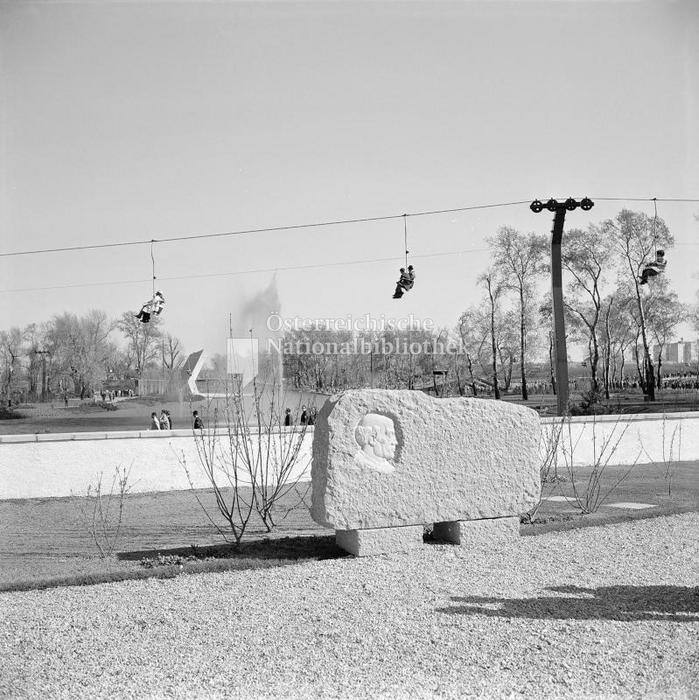
Paracelsus – Medicine & Mysticism in the Donaupark
A monument in the Donaupark is also dedicated to Aureolus Theophrastus Bombastus von Hohenheim, better known as Paracelsus. The physician, alchemist, mystic, and philosopher revolutionized medicine in the 16th century.
His memorial stone is fittingly placed amidst a medicinal herb garden—a tribute to his knowledge of nature's healing power.
%20Philipp%20Splechtna.jpg)
"The Golden Calf" – Technology as Apocalypse
At the edge of the Papstwiese, the multi-part sculpture "The Golden Calf – Technology as Apocalypse" by Austrian sculptor Karl Anton Wolf (1908–1989) stands as a striking artistic statement.
The artwork explores the dual nature of technological progress—celebrated as an achievement, yet also seen as a potential threat. It serves as a powerful symbol of the critical engagement with the modern world.
(c) Philipp Splechtna
%20Philipp%20Splechtna.jpg)
Memorial Stone for Wehrmacht Deserters
The Donaupark also holds a dark past: On the former military shooting range Kagran, hundreds of Wehrmacht soldiers were executed by firing squads between 1938 and 1945.
Today, the "Memorial Stone for Executed Wehrmacht Deserters" honors the victims of Nazi military justice. Erected in 1984 by the City of Vienna and the Ministry of Defense, it stands as a symbol against forgetting.
(c) APA
%20Philipp%20Splechtna.jpg)
Bees & Butterflies – Nature Conservation in the Donaupark
Since the opening of the Donaupark, Viennese beekeepers have been tending to beehives in the area. The beekeeping school shares its knowledge with kindergartens and schools, while aspiring urban beekeepers can take beginner courses here.
A specially designed butterfly meadow has been created to provide an ideal habitat for butterflies. The butterflies hatch in a breeding station next to the meadow and are then released into the park, helping to support the ecological balance.
(c) Philipp Splechtna
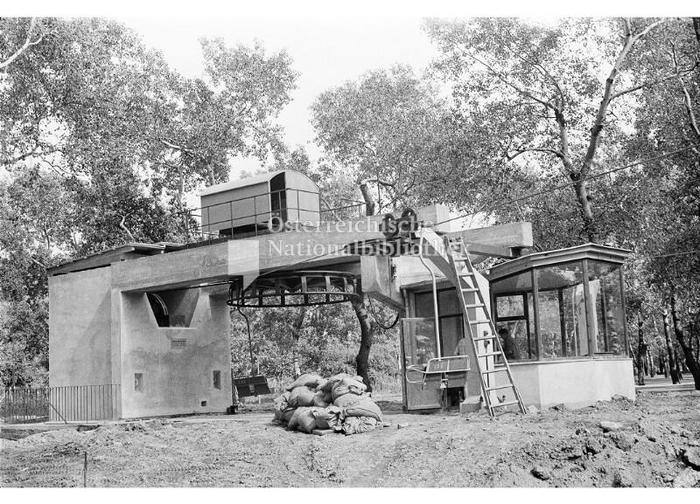
A Vision in the Air
For the Vienna International Garden Show 1964 (WIG 64), a true highlight emerged in the Donaupark: a two-kilometer-long chairlift carried visitors silently over the vast grounds of what was once a landfill – now a green oasis.
(c) Austrian National Library
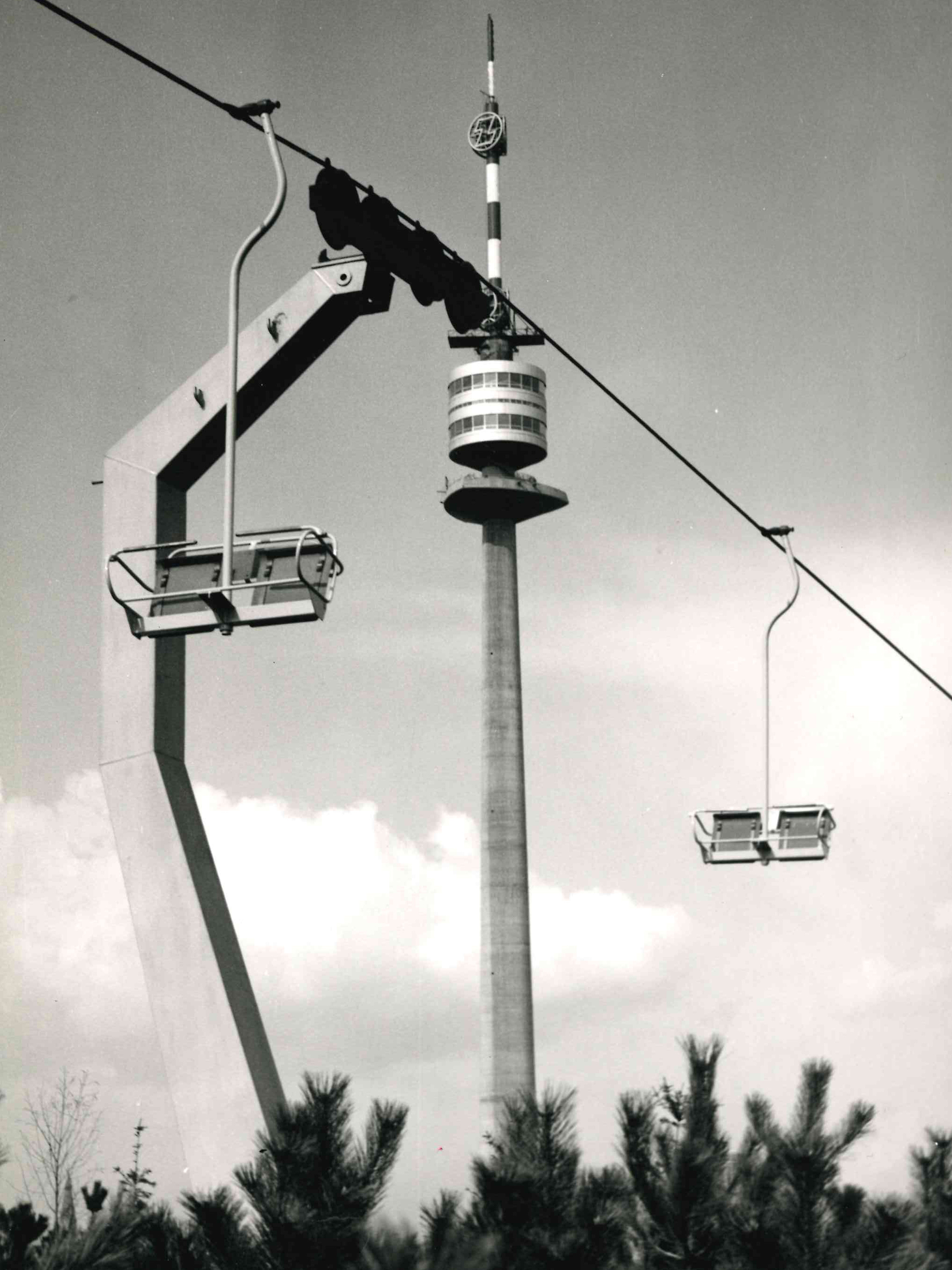
Hollywood Flair in the Green
In stylish two-seaters – reminiscent of Hollywood swings – visitors of the WIG 64 glided silently above the park, enjoying the newly designed landscape from a bird’s-eye view.
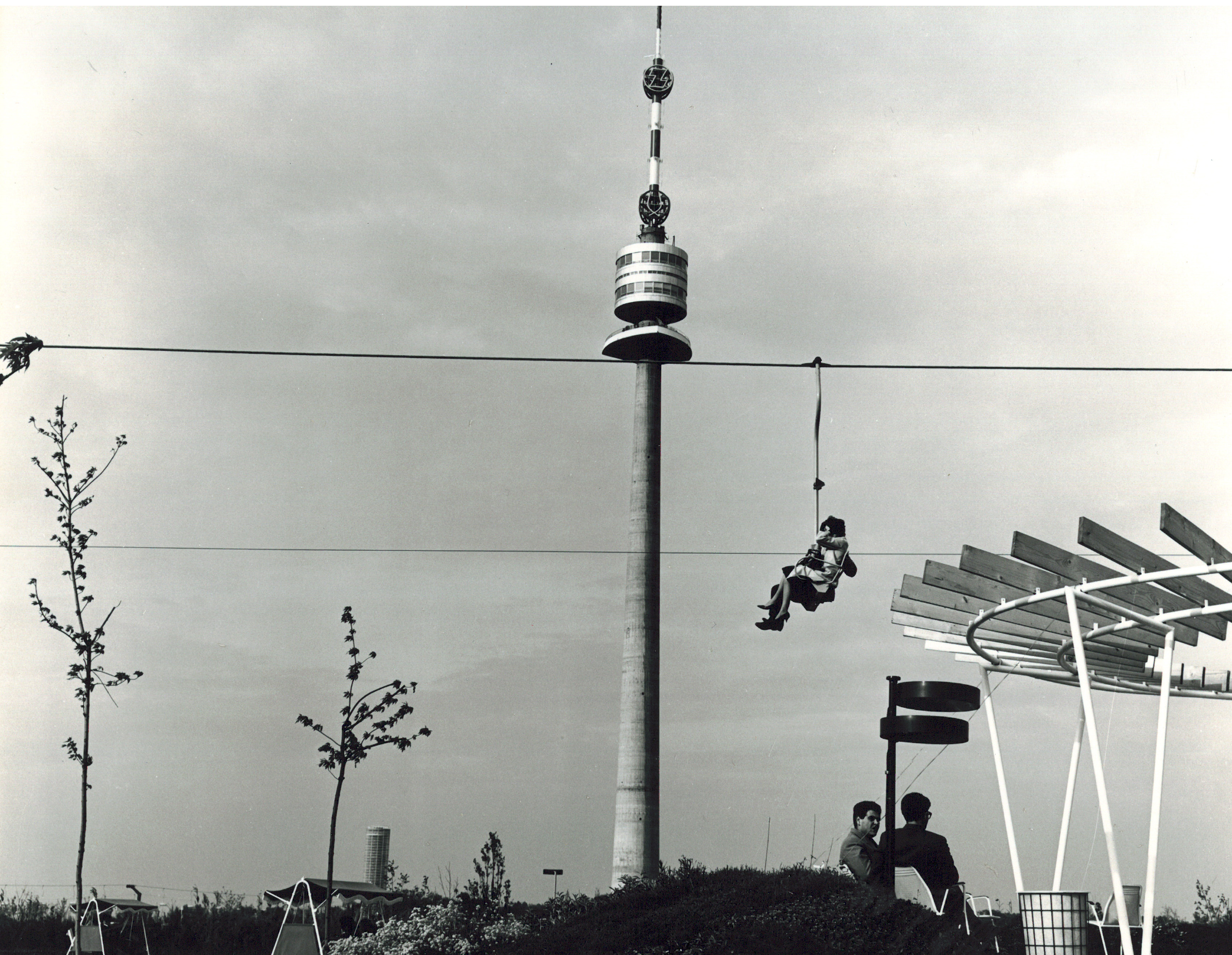
Engineering Excellence
The lift was constructed in a striking triangular layout, featuring one drive station and two return stations.
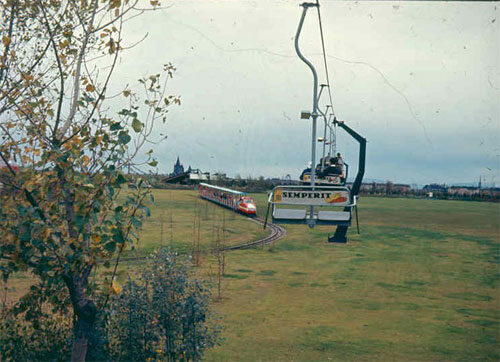
Engineering Excellence
It was powered hydroelectrically via a Kienast-Kissling gearbox and an electric motor by Elin Austria.
(c) Rikki
A Creation by GIRAK
The lift was built by the company Brüder Girak from Korneuburg – later Garaventa, now part of global market leader Doppelmayr.
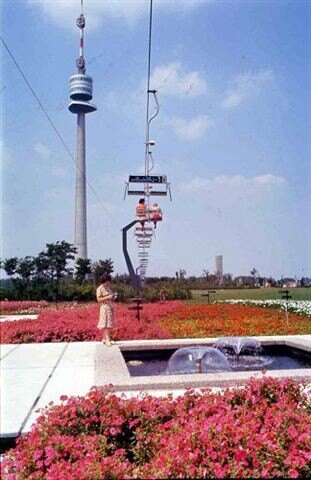
The Ride
he chairlift gently lifted off the ground – passing flower beds and pavilions of the 1964 garden exhibition, it offered a relaxed panoramic journey through Donaupark.
(c) Thomas Schiffer
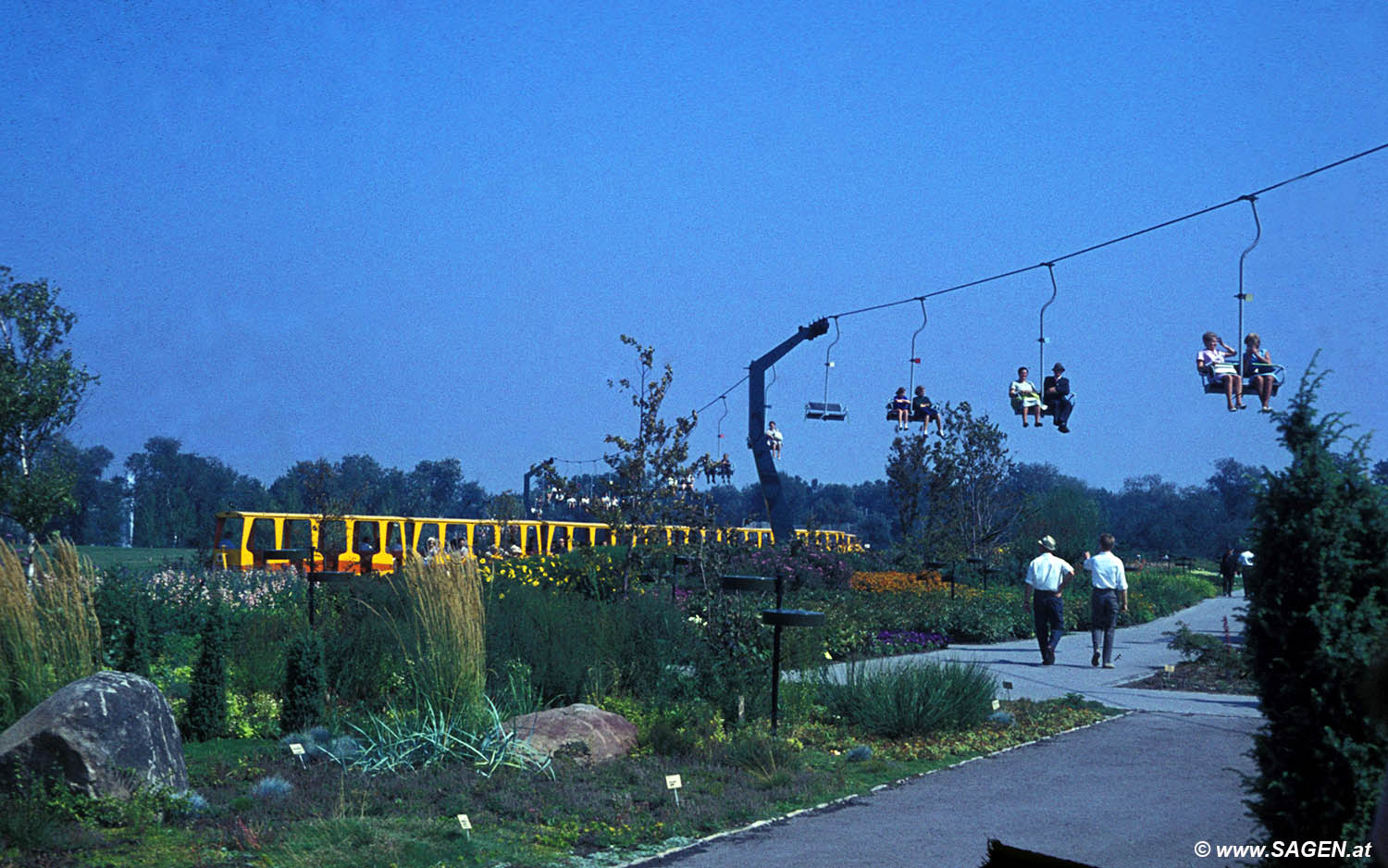
Floating Through the Park
High above, the lift revealed sweeping views of the “new” Vienna – an unforgettable experience for young and old alike, far from the rush of everyday life.
Bildarchiv sagen.at
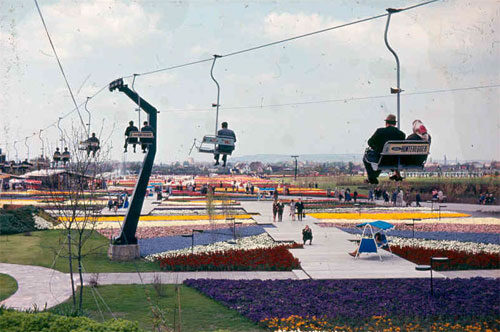
A View from Above
High above, the lift revealed sweeping views of the “new” Vienna – an unforgettable experience for young and old alike, far from the rush of everyday life.
(c) Rikki
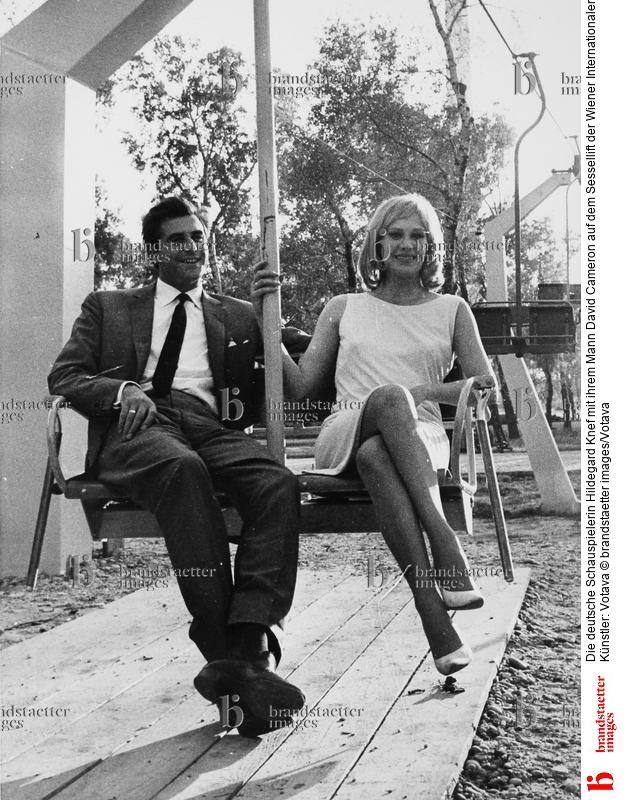
Hildegard Knef on the Chairlift
Even celebrities enjoyed the ride through Donaupark: German film icon Hildegard Knef took a trip on the new lift together with her husband David Cameron.
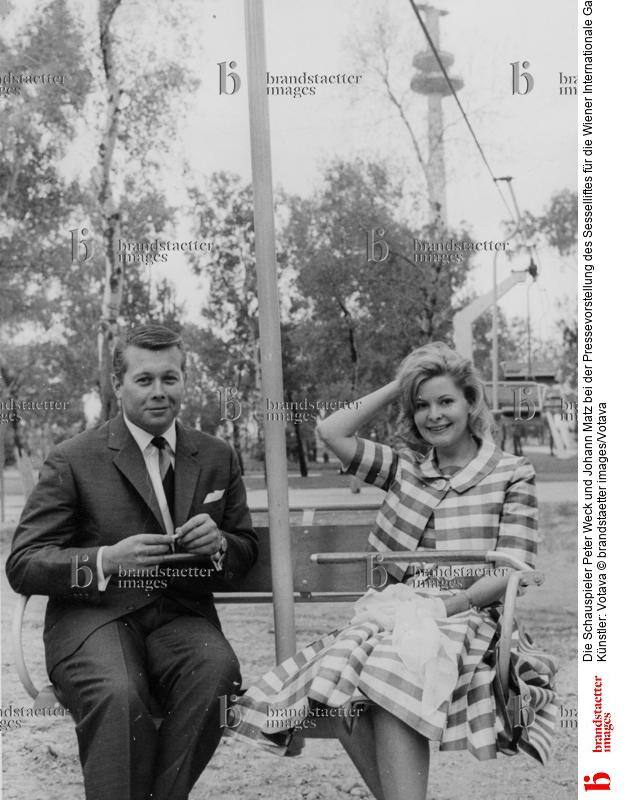
Peter Weck at the Press Ride
Austrian actor and crowd favorite Peter Weck personally tested the floating innovation during the official press presentation of the chairlift.
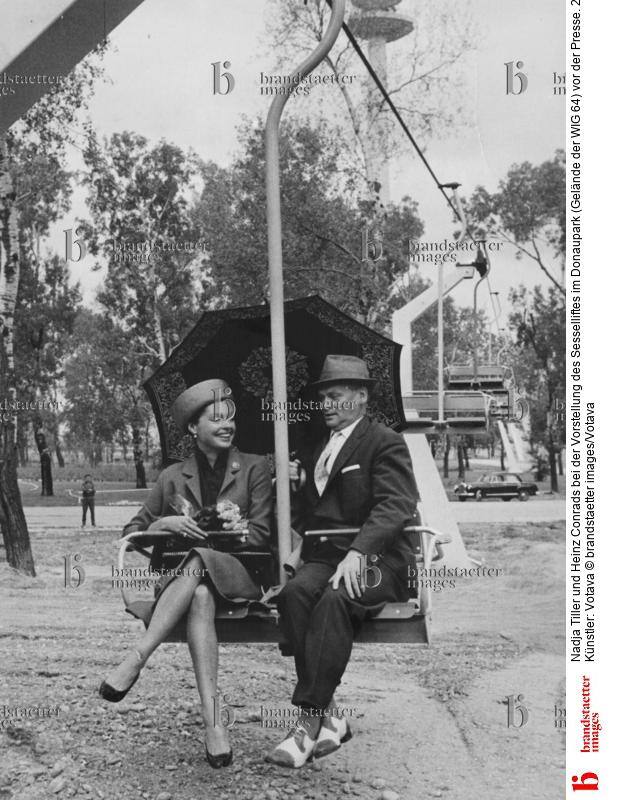
Stars in the Sky
Film icon Nadja Tiller and TV legend Heinz Conrads enjoyed the WIG 64 chairlift – with a scenic bird’s-eye view of the newly transformed Vienna.
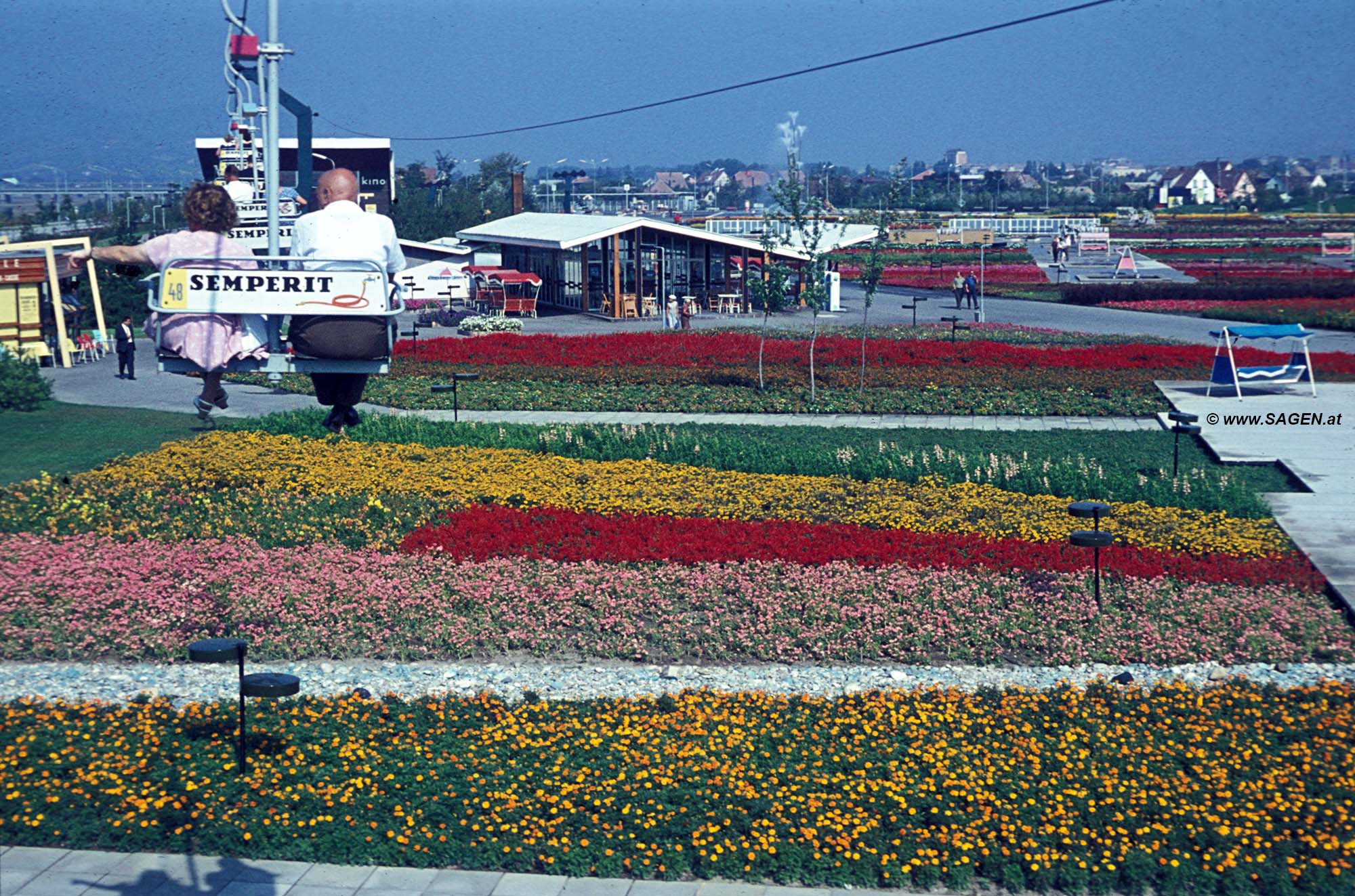
End of an Era
After operations ceased in the 1980s, the chairlift was dismantled in 1985. The cables and chairs disappeared, while some towers remained visible for years.
Bildarchiv sagen.at
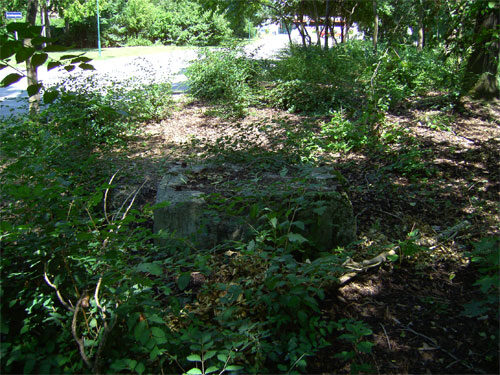
Hidden in the Woods
Traces of the WIG 64 chairlift still remain: In the small forest north of the Donauturm station of the Donauparkbahn lies an old tower foundation – a silent witness of Vienna’s floating past.
(c) 2008 Ronny
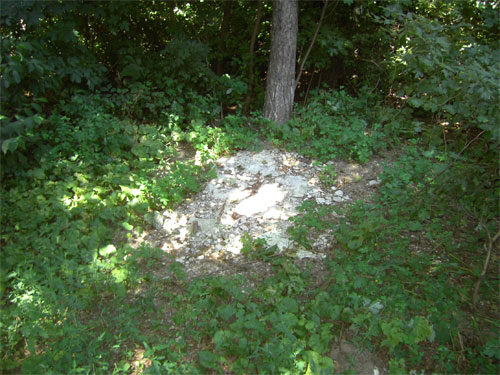
Final Tower Anchor
Near the southern of the two turning stations, a foundation with a cast-in anchor can still be found – likely the last support point of the historic cable route.
(c) 2008 Ronny
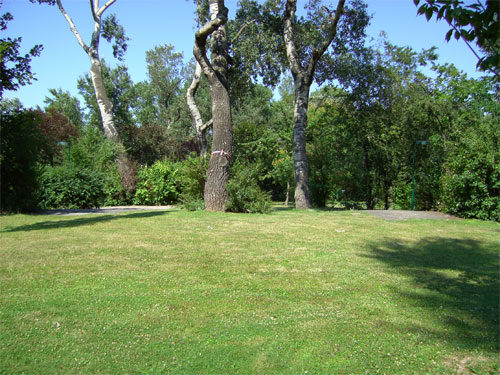
Former Drive Station
The area of the former drive station is still visible: Asphalt surfaces on either side of the trees align precisely with the angles of the former cable car route. The building once stood just behind the now fully grown trees.
(c) 2008 Ronny